
Choosing the right welding wire is an important part of producing consistent, high-quality welds. The wrong consumable can lead to excessive spatter, poor feedability, inconsistent penetration, difficult slag removal and welds that don’t meet the requirements of the application.
With so many welding wires and filler metals available, how do you know which one is right for the job?
The answer depends on several factors—including the base material, welding process, material thickness, welding position, mechanical requirements and desired weld characteristics.
At Washington Alloy, we work with welding professionals and distributors to help identify the right consumables for a wide range of applications. Here’s what to consider when selecting welding wire.
1. Start With the Base Material
The first question to ask is: What are you welding?
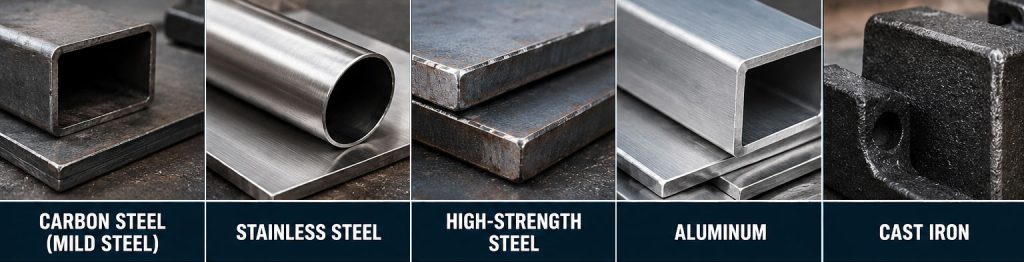
Different base materials require different types of welding consumables. Carbon steel, stainless steel and high-strength steels, for example, have different chemical and mechanical properties and may require very different filler metals.
For carbon and mild steel applications, common choices include solid MIG wires and flux-cored wires designed for specific strength and welding requirements.
For stainless steel applications, the filler metal must be compatible with the grade of stainless being welded.
High-strength steels may require a consumable capable of producing a weld with specific tensile strength and other mechanical properties.
Matching the consumable to the base material is one of the most important steps in producing a sound weld.
2. Consider Your Welding Process
Your welding process will significantly narrow down your consumable options.
MIG Welding
MIG, or gas metal arc welding (GMAW), commonly uses a continuous solid welding wire with shielding gas. Solid MIG wire can provide excellent feedability and productivity and is widely used in fabrication, manufacturing and general welding applications.
Flux-Cored Welding
Flux-cored arc welding (FCAW) uses a tubular wire containing flux. Depending on the classification, flux-cored wires can offer excellent deposition rates, penetration and performance in a variety of welding positions.
Some flux-cored wires are designed specifically for all-position welding, while others are optimized for particular applications or positions.
For example, E71T-1 flux-cored wire is commonly used for welding mild and high-strength steels and is known for characteristics such as smooth arc performance, low spatter and easy slag removal.
TIG Welding
TIG welding generally uses a separate filler rod rather than a continuously fed welding wire. The filler material must still be properly matched to the base material and application.
Understanding which welding process you’re using is an important first step toward narrowing down the right consumable.
3. Pay Attention to Material Thickness
The thickness of the material you’re welding can also influence your choice of welding wire.
Wire diameter affects the amount of current that can be used, deposition rate and overall weld control.
Smaller diameter wires can provide greater control and may be appropriate for thinner materials and applications where precise weld placement is important.
Larger diameter wires can support higher amperage and deposition rates, making them useful for heavier material and applications where productivity is a priority.
However, bigger isn’t always better.
The goal is to select a wire diameter that works with your equipment, material thickness, welding position and desired deposition rate.
4. Consider the Welding Position
Where the weld is being made matters.
Are you welding in the:
Flat position?
Horizontal position?
Vertical position?
Overhead position?
Some welding consumables are designed specifically for certain positions, while others are formulated for all-position welding.
If an application requires vertical or overhead welding, selecting a consumable designed for those positions can make a significant difference in weld control and overall performance.
Always check the manufacturer’s classification and recommended applications before selecting a consumable.
5. Understand Welding Wire Classifications
Welding wire classifications can look confusing at first, but they provide valuable information about a consumable’s intended characteristics.
For example, consider ER70S-6.
The classification provides information about the wire’s type, strength and chemical composition.
Similarly, an E71T-1 flux-cored wire classification tells you important information about the consumable’s characteristics and intended application.
Understanding these classifications allows welders, purchasing managers and fabricators to make more informed decisions rather than simply selecting a product based on brand or price.
When evaluating a welding wire, make sure the classification meets the requirements of the welding procedure and application.
6. Look Beyond Strength
Strength is obviously important, but it’s not the only consideration when selecting a welding consumable.
Two wires that meet similar strength requirements can behave very differently during the welding process.
Depending on the application, you may also want to consider:
Arc stability:
A stable arc can make it easier for the welder to maintain consistent welds.
Spatter:
Lower spatter can reduce cleanup time and improve overall shop productivity.
Feedability:
Consistent feeding is critical for maintaining a stable welding process, particularly in production environments.
Slag removal:
For flux-cored applications, easy slag removal can save time between passes and reduce cleanup.
Penetration:
Different consumables can provide different penetration characteristics, which can be important depending on joint design and material thickness.
Deposition rate:
Higher deposition rates can improve productivity when the application allows for them.
The best welding wire isn’t necessarily the least expensive wire. It’s the wire that provides the right combination of performance, productivity and reliability for the application.
7. Consider the Welding Environment
The environment in which the welding is taking place can also affect consumable selection.
Indoor fabrication environments may provide significantly more control over shielding gas and environmental conditions than outdoor construction or field welding.
Wind, contamination, moisture and other environmental factors can influence welding performance.
For applications where environmental conditions are more challenging, selecting an appropriate consumable and welding process becomes even more important.
Proper storage and handling of welding consumables is also essential. Even a high-quality welding wire can experience performance issues if it isn’t stored and handled appropriately.
8. Don’t Forget Your Equipment
Your welding equipment needs to be compatible with the consumable you’re selecting.
Before purchasing a welding wire, consider:
Wire diameter
Welding machine capabilities
Amperage range
Wire-feed system
Shielding gas requirements
Contact tips and liners
Welding position
Duty cycle
A consumable may be perfectly suited for an application on paper but still perform poorly if the welding equipment isn’t properly configured.
Proper machine settings and consumable selection should work together.
9. Think About the Total Cost—not Just the Price
Price per spool or pound is only one part of the equation.
A lower-cost welding wire isn’t necessarily the lowest-cost option if it results in:
More spatter
Increased cleanup
Poor feedability
More downtime
Inconsistent weld quality
Increased rework
Lower productivity
When evaluating welding consumables, consider the total cost of welding.
A consumable that costs slightly more but provides better feedability, less spatter and higher productivity may ultimately provide greater value.
For production environments, even small improvements in welding efficiency can add up quickly.
A Simple Checklist for Choosing Welding Wire
Before selecting a welding consumable, ask these questions:
1. What material am I welding?
2. What welding process am I using?
3. What is the material thickness?
4. What welding positions are required?
5. What wire diameter is appropriate?
6. What classification does the application require?
7. What mechanical properties are needed?
8. What arc and weld characteristics are important?
9. What shielding gas and equipment are being used?
10. What will provide the best overall value and productivity?
Answering these questions will help narrow down the right welding wire for your application.
The Right Consumable Can Make a Difference
The right consumable can contribute to better weld quality, improved productivity, reduced spatter, easier cleanup, and more consistent results. Whether you’re purchasing welding wire for a single fabrication project or managing consumables for a high-volume production environment, taking the time to match the product to the application can pay off.
At Washington Alloy, we provide a wide range of welding consumables and work with customers to help identify products that meet their specific welding requirements.
If you’re unsure which welding wire or filler metal is right for your application, contact Washington Alloy to discuss your requirements and find the right consumable for the job.